Some of you have commented on my lack of recent posts. Yes, it's been busy--one "excuse" is that I'm in school. Below is a paper I wrote for my Topics in International Marketing class, which relates to LatAm marketing and customer loyalty.
One of the fastest-growing online marketing tactics over the last three years is often termed “social couponing” or “group sales” sites. The leader of this trend, not just here in the U.S. but globally, is Groupon.
Like other social couponing sites, Groupon operates by attracting customer subscriptions and site traffic, where consumers have access to deals from local merchants. When a minimum number of consumers subscribes to the offer, the deal becomes active, giving them access to deep discounts on products and services. Groupon takes a 50 percent cut of the advertised price.
Not even three years old and claiming 40 million subscribers, this Chicago-based company declined a $6 billion acquisition offer from Google last December (Quinton, 2011). It has expanded into many markets—Canada, Europe, Australia, Asia and Latin America—by acquiring similar deal providers. Nearly a year ago, the company acquired ClanDescuento, which provided offers in Chile, Peru, Argentina, Colombia and Mexico. Groupon researches the local markets in which it operates to identify successful businesses, after which sales personnel approach those businesses and offer a partnership (neXtupResearch/Global Silicon Valley Partners, 2011). The mom-and-pop businesses thrive across Latin America, and local operations can be key to forging relationships with those businesses (Guimarães & Neves, 2010).
In an August 2010 press release, Groupon President and COO Rob Solomon explained, “We are especially interested in catering to the unique cultures and interests of each market and that’s why they are managed by local teams in different markets.” (WiredLatinos, 2010) Groupon currently operates in several Latin American markets: Mexico, Brazil, Argentina, Chile, Colombia and Peru. Last year several other group sales sites launched in Latin America, including OferCity.com, Cuponzote.com, BuzzUrbano.com and ClickOnero.com in Mexico, OfertaSimple.com in Panama, Colombia and Argentina, and Cuponidad.com in Colombia (WiredLatinos, 2010). Sites targeting Latino consumers within the U.S. include PapáPosible.com and DescuentoLibre.com.
When the founders of some of the above-named group sales sites operating in Latin America speak about the opportunities they cite that, between Mexico, Argentina, Brazil, Colombia, Chile, Peru, Uruguay, Puerto Rico and the Dominican Republic, there are 166 million online users—an average penetration of 37 percent—and advertisers are not missing out on this market but are instead investing heavily. The figure for general online advertising in 2009 was $880 million (WiredLatinos, 2010). No figures were available to show online couponing growth specifically in Latin America.
There are several significant barriers in Latin American markets, such as online access, credit card use and general economics. Groupon is approaching the credit payment obstacle head-on, by partnering with trusted local business to offer payment alternatives. Executives from Groupon and other sites see online couponing as a new culture their consumers are learning. Internet penetration and ecommerce are still in early growth stage throughout most of Latin America, and the online buying culture we have developed in the U.S. is just emerging there (WiredLatinos, 2010). At OferCity, teams intend to educate small business operators in Mexico that social ecommerce is effective and that it represents an investment and a real opportunity, versus an expense.
Despite the cultural and other barriers present, the appeal of discounts on luxury and other products and services appears to have a universal appeal, as shown by the onslaught of Groupon and similar group sales sites and further illustrated with Groupon’s recent $15 billion valuation (Quinton, 2011). The appeal also exists initially for small business owners, who appreciate the zero upfront investment required for their partnership with Groupon.
The not-so-mentioned phenomenon is the actual experience from the small business perspective. In the U.S., small business owners warn each other about the related threats that can cost them their business. Most significant are the cases of businesses that, through Groupon offers that weren’t smartly capped, have overpromised and underdelivered, or the unfortunate trend of investing in one-time customers who are price-sensitive deal hunters and often prove high maintenance. These circumstances have often resulted in net loss, not profit. There is also the concern of a brand losing perceived quality by undercutting its prices.
Savvy small business owners are indeed wary of these threats, as found in a Rice University study in September 2010. Researchers interviewed 150 merchants who had partners with Groupon on deals. Of those, 32 percent said that the outcome was not profitable (some even suffering losses) and 40 percent said that they would not run another promotion with Groupon (neXtupResearch/Global Silicon Valley Partners, 2011).
I sought to learn whether Latin American consumers would behave differently than subscribers here, or if they would also shop the best deals no matter the advertiser. U.S. Latino consumers are known to index as more brand-loyal than consumers from market at large; therefore the Groupon experience in Argentina and elsewhere in Latin America might have more positive results for both consumer and merchant.
A 2003 Cultural Access Group study showed that the most unacculturated U.S. Latinos—typically those who have been in the country the least amount of time—behave with the greatest brand loyalty. This same group also demonstrated greater brand affinity in product categories that have prestige or high price points, or those they see as more serious or important; think automotive, electronics or OTC medications versus laundry detergent or sour cream (Ashton & Valdovinos, 2005, pp. 21-22). A Global Insight study also found Hispanic consumers to be very loyal buyers. In that study and from 1998 to 2000, Latinos ranked number one in brand loyalty among ethnic and cultural groups. In the automotive category for example, U.S. Latinos proved to be twice as likely to buy the same brand of vehicle for their next purchase as the average consumer, and they displayed the second-highest percentage of dealer loyalty (Cartagena, 2005). From these studies and for the purpose of this research we could surmise that Latin American consumers are a generally brand-loyal group in their homelands.
Though they index higher on brand loyalty than the average consumer, Latinos are also known value shoppers who desire to find quality while remaining a price-conscious consumer group. Both in the U.S. and throughout Latin America, the matriarch is the traditional decision maker for everyday purchases. In an online survey of Spanish-speaking female consumers in the U.S., conducted by Todobebé in April 2010, coupons and other offers from retailers were by far the most important motivators; online advertising and information were also deemed valuable (Tornoe, 2010). However, couponing to U.S. Latinos has not traditionally brought impressive results; marketers maintain that printing coupons in-language isn’t the whole story. Those advertisers many times promote brands/products that are irrelevant, do not offer price reductions that impress Hispanic consumers, require multiple-item purchases for discount or limit to a quick-turn expiration (Grant, 2006). By localizing operations in the markets Groupon serves, it can bypass some of the mistakes made in the U.S. by less-savvy marketers. Results from a study conducted by direct media company ADVO (since acquired by Vallasis) show that 74 percent of Spanish-dominant Hispanics say they use coupons and would use them more frequently if they received more (Lipton, 2007).
Latinos in their homelands, much like those who have recently arrived to the U.S., are relatively new to direct marketing practices and therefore more receptive to all forms of direct marketing, including direct mail and, in the case of online consumers, email marketing. In the ADVO study of U.S. Latinos, 40 percent reported receiving just 10 pieces of direct mail a year, and 39 percent said they want to receive more (Lipton, 2007). It’s not just talk; this group brings higher response rates than the general market, no matter the medium (Cartagena, 2005). This would bring me to conclude that offers such as those of Groupon would be of interest to consumers in Latin America who otherwise enjoy deals though may not be accustomed to receiving coupons.
Unfortunately, my plan to discover the outcome as it relates to customer loyalty was thwarted by a lack of available research and other documentation specific to current consumer behaviors in Latin America. I will instead offer a hypothesis based on the information I have culled from the research I was able to access.
I learned that some would believe that the type of consumer that subscribes to Groupon is simply not a brand shopper. For example, blogger Barry Hurd considers the Groupon business model parallel to that of Walmart—neither acts in favor of the brands they market, but instead they both drive local shoppers to find the best deals. People shop at Walmart not for the brands, but for the value (Hurd, 2011). These are Groupon shoppers. So whether in the U.S. or in Latin America or elsewhere, merchants not competing on an “Everyday Low Price” model need to differentiate themselves otherwise—and command a price that reflects their unique value proposition. If we agree with Hurd’s concept, brands that align themselves with Groupon are eventually going to be seen as the types of brands you would find on Walmart’s shelves. Because of the inherently viral sharing of coupons, Groupon may go further than simply demoting a brand’s uniqueness, even putting that brand out of business. Hurd wrote, “The ratio of consumer savings versus business profit can kill small business.” Simply put, small businesses by their nature aren’t equipped to deal with the scale viral coupons can achieve and the spikes in traffic they bring.
To be clear, this doesn’t signify that consumers won’t keep going after Groupon-type deals worldwide. There will always be bargain shoppers, eager to boast their big savings and indulge in services which they may not otherwise. In Latin America, which is about 18 months behind the U.S. in social couponing, the Groupon customer base will likely experience a slower pattern of adoption based on online usage, economics and other barriers, yet I project the region will see explosive growth similar to what we have witnessed stateside. Why? Consumers see it as a win-win.
However, this research is not focused on the customer perspective but whether that Latin American Groupon customer responds with loyalty. Groupon as it operates today doesn’t encourage the repeat business mom-and-pop shops require for sustainable success. Groupon customers base their decisions of where to shop and what to buy on the offer of the day, but authentic loyalty cannot be bought. That loyalty is earned through memorable customer experiences, at retail and with the product, and high perceived value.
For this topic to be aptly studied, primary research needs to be conducted and made accessible. For the purpose of this paper, I would like to advance my hypothesis that shoppers in Latin America, as here in the U.S., can be divided into two classes—the brand-loyal and the deal-hunter. Consumers who are brand-loyal and contribute to that sustainability small business requires are not likely to convert into Groupon customers, nor are deal-hunters likely to settle on a brand at full price while alternatives exist.
Bibliography
Ashton, J. R., & Valdovinos, M. (2005). "A Snapshot of the U.S. Hispanic Market". In E. d. Valle, Hispanic Marketing & Public Relations: Understanding and Targeting America's Largest Minority. Boca Raton: Poyeen Publishing.
B.J. Thurlby, P. W. (2010, August 10). Trade Mission Notes: Promote Washington Cherries Abroad. Retrieved April 3, 2011, from Governor Chris Gregoire: http://www.governor.wa.gov/blog/2010asia/20100820.asp
Cartagena, C. (2005). Latino Boom! Everything You Need to Know to Grow Your Business in the U.S. Hispanic Market. New York: Ballantine Books.
Grant, J. (2006, July). "Don’t Make These Mistakes When Targeting U.S. Hispanics". Retrieved April 30, 2011, from www.CPGMatters.com: http://www.cpgmatters.com/coupons0806.html
Guimarães, P., & Neves, B. (2010, October). "Locking up loyalty: Winning over Latin America’s mom-and-pops". Retrieved May 1, 2011, from Consumer & Shopper Insights: http://csi.mckinsey.com/Home/Knowledge_by_region/Americas/Locking_up_loyalty.aspx
Hurd, B. (2011, February 21). Groupon Becoming a Digital Walmart. Retrieved March 20, 2011, from Thoughts on the Digital Divide: http://barryhurd.com/2011/02/groupon-becoming-a-digital-walmart/
Kumar, D. S., Guruvayurappan, N., & Banerjee, M. (2010, January 20). Ethnic Consumers Consulting. Indian Institute of Management/Richard Ivey School of Business, The University of Western Ontario .
Lascu, D.-N. (2008). International Marketing. Mason, OH: Atomic Dog, a part of Cengage Learning.
Lipton, S. (2007, March 1). "Coupon Redención". Retrieved April 30, 2011, from www.PromoMagazine.com: http://promomagazine.com/incentives/marketing_coupon_redencin/
neXtupResearch/Global Silicon Valley Partners. (2011, February 1). Retrieved March 20, 2011, from www.Scribd.com: http://www.scribd.com/doc/48117058/Sharespost-Groupon-Research-Report
Quinton, B. (2011, january 20). "Up and Down with the Social Coupon Folk". Retrieved March 20, 2011, from The Big Fat Marketing Blog: http://bigfatmarketingblog.com/2011/01/20/up-and-down-with-the-social-coupon-folk/
Tornoe, J. G. (2010, July 15). "Using Online Ads to Get Hispanic Shoppers In-Store". Retrieved May 1, 2011, from Hispanic Trending: Latino Marketing and Advertising Consulting and Trends: http://www.hispanictrending.net/
Wilhelm, S. (2011, March 7). Mexican truck pact could boost fruit imports from Washington. Puget Sound Business Journal .
WiredLatinos. (2010, August 25 2010). "Groupon-like sites flood Mexico and Latin America". Retrieved March 24, 2011, from www.WiredLatinos.com: http://www.wiredlatinos.com/uncategorized/groupon-like-sites-flood-mexico-and-latin-america/
Showing posts with label Hispanic marketing. Show all posts
Showing posts with label Hispanic marketing. Show all posts
Sunday, May 22, 2011
Friday, November 26, 2010
Marketing 101: The Difference Between PR and Advertising
Sometimes people forget that marketing to Latinos can have all the same components (and successes and frustrations!) as marketing to a more general population. No matter your target, the marketing mix can and should include various tactics, including public relations and advertising. However, there are many significant differences between these tactics. For the non-marketer, I would like to review at a very high level public relations and advertising, and their advantages and disadvantages.
Advertising and public relations. They both belong in a cohesive marketing plan. They both require significant strategy and coordination. They both require consumer insights and market expertise. They will produce different results that can help give your brand exposure and credibility.
One big myth about the difference between public relations and advertising is that PR is "free." Marketers are spending time working on a compelling angle, talking to media contacts, pitching stories, following up and scheduling interviews, etc. All this takes time--and time equals money. But the media is free, so many companies view it as if it were free advertising. But it's not. It's not free, and it's certainly not advertising.
That bring us to the next significant difference between PR and advertising: CONTROL. In advertising, you pay media for a particular space/time/position and the content you supply is what your audience sees. No surprises, assuming all goes according to plan.
In public relations, marketers aren't buying media, so the control isn't there. The brand's end result could be no exposure, limited exposure, New York Times front-cover exposure, or even negative exposure. Marketers, and the companies and organizations we represent, are at the mercy of the media on this one. We build connections and work on media relations so that when the time comes, we understand what our contacts need and they in turn are willing to showcase our client. The payoff, of course, is that editorial exposure is seen as more reliable, truthful, objective--more newsy--than advertising.
This brings me to my latest foray into PR. Earlier this week I was interviewed by the Puget Sound Business Journal for a story on Mariners' Pitcher Felix Hernandez and his recently announced American League Cy Young Award. How might this award impact Felix' marketability? I was asked. Here are some things I shared with the reporter:
Smart companies have long strategized their marketing to include more multicultural cues and references. This way, a more cost-effective campaign may be implemented that can still meet both audience's needs. For example, if your company is targeting Spanish-dominant Latinos as well as the general public, a TV spot can be developed to leverage similar imagery for both but with English and Spanish voiceovers or superimposed text to best communicate the salient points. This only really works if you have everyone in the room at the outset of the project and in agreement on the ad's objectives.
Sometimes companies are simply too big to get everyone together that way, and that's OK. Many times it's these same companies who have the resources to produce original Hispanic creative directed at their Latino target, which in a nutshell is the ideal way to handle Hispanic marketing.
The sad truth is that, oftentimes, Hispanic marketing efforts are left for last, really a whoops-we-forgot-about-a-big-percentage-of-our-target effort instead of embarking on a well-planned and measurable program.
The work we do at Conexión Marketing is either very local or national. National accounts have always been our mainstay, but we're here to say that with more than 400,000 Latinos permanently residing in King, Snohomish and Pierce Counties, it's time to take for local companies that next step! Whether through advertising, public relations, social media, direct marketing, another tactic or a full mix, companies need to take note now that this market is being sorely missed.
The good news? There's still time to be the top-of-mind brand in your category among the fastest-growing cultural demographic!
In just a few weeks, a topline of the Census data will be announced. Things might change when people realize what it means that the U.S. Latino population is the fastest-growing--even right here in Seattle, Washington.
Read the full Puget Sound Business Journal article here (full access may require subscription).
*****************
FOLLOW-UP: To the credit of the Puget Sound Business Journal, the online version of the article was revised to properly attribute comments. Kudos to Aislyn Greene and the PSBJ for the considerate follow-up!
Advertising and public relations. They both belong in a cohesive marketing plan. They both require significant strategy and coordination. They both require consumer insights and market expertise. They will produce different results that can help give your brand exposure and credibility.
One big myth about the difference between public relations and advertising is that PR is "free." Marketers are spending time working on a compelling angle, talking to media contacts, pitching stories, following up and scheduling interviews, etc. All this takes time--and time equals money. But the media is free, so many companies view it as if it were free advertising. But it's not. It's not free, and it's certainly not advertising.
That bring us to the next significant difference between PR and advertising: CONTROL. In advertising, you pay media for a particular space/time/position and the content you supply is what your audience sees. No surprises, assuming all goes according to plan.
In public relations, marketers aren't buying media, so the control isn't there. The brand's end result could be no exposure, limited exposure, New York Times front-cover exposure, or even negative exposure. Marketers, and the companies and organizations we represent, are at the mercy of the media on this one. We build connections and work on media relations so that when the time comes, we understand what our contacts need and they in turn are willing to showcase our client. The payoff, of course, is that editorial exposure is seen as more reliable, truthful, objective--more newsy--than advertising.
This brings me to my latest foray into PR. Earlier this week I was interviewed by the Puget Sound Business Journal for a story on Mariners' Pitcher Felix Hernandez and his recently announced American League Cy Young Award. How might this award impact Felix' marketability? I was asked. Here are some things I shared with the reporter:
- Felix Hernandez can now be considered a local sports hero. As Fredy Montero is currently serving as Super Supplements' Latino spokesman in local Hispanic media, perhaps there is a simliar path Felix could take now that he's garnered more attention and value. (I did not specifically recommend Felix represent fast food or vitamins.)
- Remember Edgar Martinez in those The Home Depot TV spots of years past? Edgar didn't have a big command of the English language but won over audiences, Latino and non-Latino. Felix also represents that-guy-next-door that audiences could trust as a spokesperson. Because he has such strong ties with Venezuela, he would be especially effective in Latino-specific marketing.
- We didn't discuss how much Felix could earn from commercial ventures, although the range quoted and attributed to me don't seem out of bounds.
Smart companies have long strategized their marketing to include more multicultural cues and references. This way, a more cost-effective campaign may be implemented that can still meet both audience's needs. For example, if your company is targeting Spanish-dominant Latinos as well as the general public, a TV spot can be developed to leverage similar imagery for both but with English and Spanish voiceovers or superimposed text to best communicate the salient points. This only really works if you have everyone in the room at the outset of the project and in agreement on the ad's objectives.
Sometimes companies are simply too big to get everyone together that way, and that's OK. Many times it's these same companies who have the resources to produce original Hispanic creative directed at their Latino target, which in a nutshell is the ideal way to handle Hispanic marketing.
The sad truth is that, oftentimes, Hispanic marketing efforts are left for last, really a whoops-we-forgot-about-a-big-percentage-of-our-target effort instead of embarking on a well-planned and measurable program.
The work we do at Conexión Marketing is either very local or national. National accounts have always been our mainstay, but we're here to say that with more than 400,000 Latinos permanently residing in King, Snohomish and Pierce Counties, it's time to take for local companies that next step! Whether through advertising, public relations, social media, direct marketing, another tactic or a full mix, companies need to take note now that this market is being sorely missed.
The good news? There's still time to be the top-of-mind brand in your category among the fastest-growing cultural demographic!
In just a few weeks, a topline of the Census data will be announced. Things might change when people realize what it means that the U.S. Latino population is the fastest-growing--even right here in Seattle, Washington.
Read the full Puget Sound Business Journal article here (full access may require subscription).
*****************
FOLLOW-UP: To the credit of the Puget Sound Business Journal, the online version of the article was revised to properly attribute comments. Kudos to Aislyn Greene and the PSBJ for the considerate follow-up!


Friday, October 15, 2010
Washington State Media Values 600,000+ Population
Wow. It’s very telling that Washington state television has reached the level of sophistication of California media when it comes to sharing civic issues specifically with its Spanish-dominant Latino population!
Well, Washington is right up there with California, reminding all that 1) government issues are relevant to Washington state Latinos and that 2) Latinos are relevant to our state’s government!

KCTS 9 aired their Ask the Governor program last Monday with Governor Christine Gregoire—live, and complete with calls and emails from concerned citizens. This was another significant opportunity for Washington voters and residents to learn about the pressing issues we face—and just in time for our upcoming elections.
But there’s a twist.
The local Vme affiliate again collaborated on this important project. Not only is the entire program dubbed in Spanish for airing on local V-Me, but Tony Gomez and team worked to create additional integration between the two airings with questions in Spanish from Latinos.
So, while most of the questions for Governor Gregoire were in English, there were a couple in Spanish. The key is this: These particular questions weren’t included just for the Spanish-language program, but aired on the original English-language program with English dubbing or subtitles. On the Spanish program, Vme will be stripping that layer and Latino viewers will hear from people in their own community. Not only does this enrich the program by collecting more diverse viewpoints, but it shows that 1) Washington state does indeed have a great Latino constituency, and 2) that demographic is actively invited to join the process of getting informed about important issues that will affect them, too.

I witnessed a piece of this process, when professional interpreters were brought in to produce the voiceovers for Enrique Cerna (the show’s host), Governor Gregoire, and questions from the public. It was a great opportunity to see the kind of devotion KCTS 9 and Vme have to make important, local content accessible to the Latinos of our state.
Tony Gomez, who practically runs Vme single-handedly, hails from California and has for years been pushing for better communication and involvement with Washington State Latinos—something that is becoming more and more critical as our state’s Hispanic population has topped 600,000.
“We want to ensure access to information that affects the lives of our viewers,” explains Community Outreach Coordinator Tony Gomez. “We also hope to create more engagement between language communities. Dropping the Spanish questions into the English broadcast allows everyone to be part of the same conversation. In this way, the program is more than a one-way dub of English content, passively received by Spanish speakers. It gets us closer to a two-way conversation and reminds everyone of our diversity.”
Pregúntele a la Gobernadora will be aired in Spanish on Vme at 7pm this evening. Vme can be viewed over the air (with a digital tuner) on 9.2 in the Seattle area/Western Washington and on 47.2 in Yakima and Central Washington. (Cable channels are Comcast 119 in Western Washington, and Charter 297 in Yakima/Central WA.) For more information about Vme in Washington, visit their site or KCTS 9 Vme on Facebook.
The Spanish-language program is also available now via the KCTS 9 site.
The Spanish-language program is also available now via the KCTS 9 site.
NEWSFLASH
Local affiliates of both Vme and KUNS (Univisión) will air Spanish versions
of the U.S. Senate Debates. The Vme broadcast will air next Friday, 10/22 at 7 pm.
It’s rumored that KUNS will try a simultaneous broadcast of this Sunday’s debate.
Tuesday, September 21, 2010
Hispanic Heritage May Be This Month, But Hispanic Culture is 24/7
Hispanic Heritage Month, September 15 - October 15. It's invented here in the U.S., much like the term "Hispanic" itself. It is based on Fiestas Patrias, or the many countries' independence days celebrated by Latin Americans everywhere. There is no "Hispanic Heritage Month" in Latin America or Spain.
So while it may be a little forced, it's a way we can devote a month to the incredible history, culture and people of these regions. It's a clear target for corporations to get "involved." But of course, that wheel keeps turning whether we're celebrating it or not.
Earlier this month, I retweeted a message about Nordstrom and its involvement in Hispanic Heritage Month this year with a special Roberto Rodriguez-designed top, the proceeds of which will benefit the Hermanitas program (part of MANA, the largest pan-Latina organization in the U.S.). Nordstrom quickly followed me on Twitter after that retweet. While this major retailer is not a client, there's something they may not realize I know about them.
Nordstrom has backed the passions, aspirations and achievements of Latinos for years, and in many significant ways.
While Nordstrom has done some national print advertising, its connection is deeper than simply attracting the Latino consumer to shop at their stores. And while it does it pretty quietly 11 months out of the year, it makes a big difference. Here are some ways Nordstrom has done it right--ways that every corporation should be noting:
CHARITABLE DONATIONS
When I last spoke with a Corporate Communications contact there, Nordstrom was making annual donations of $1,000 to $65,000 each to more than 20 Latino organizations nationally--eight of which were focused on education.
SUPPLIER DIVERSITY
Their Supplier Diversity Program, created in 1989, ensures access to the economic opportunities within Nordstrom for minority- and women-owned businesses. I have figures back from 2005, when Nordstrom expenditures with minority and women-owned businesses reached $635 million, bringing total expenditures to $6.4 billion since the program was launched.
Also, prior to building or relocating a new store, Nordstrom sponsors and promotes a Project Preview, which is designed to introduce Nordstrom to minority- and women-owned subcontractors and suppliers in local communities. This presents a great opportunity for local companies to learn about Nordstrom business practices, bidding procedures and to become familiar with the requirements of the project.
LATINA EMPOWERMENT
Each year, Nordstrom hosts the Latina Empowerment Summit at its downtown Seattle store. This is a day wherein local Latinas are invited to hear from nationally known speakers as well as a panel of regional role models. This year's Summit--the 10th annual event--is this coming Saturday. Attendees will hear from keynote speaker Consuelo Kickbusch, a retired Lieutenant Colonel in the U.S. Army, founder and president of Educational Achievement Services, Inc., and an accomplished author. It's an event that inspires and connects attendees to the Latinidad they share. (I've attended this event, too, and its an amazing warmth that's created in that room!) This year's invitations feature the work of local artist Blanca Santander.
So as you may have noticed, it's about more than just Hispanic Heritage Month, and it's about more than advertising. It's about creating a real connection--a connection that truly matters--to communities and to consumers.
Of course, as a native Seattleite I'm partial to Nordstrom, which got its start as a Seattle shoe store in 1901. But I think this is one company that can proudly serve as a model of diversity. Oh, and here's more information on its Hispanic Heritage Month promotion this year.
So while it may be a little forced, it's a way we can devote a month to the incredible history, culture and people of these regions. It's a clear target for corporations to get "involved." But of course, that wheel keeps turning whether we're celebrating it or not.
Earlier this month, I retweeted a message about Nordstrom and its involvement in Hispanic Heritage Month this year with a special Roberto Rodriguez-designed top, the proceeds of which will benefit the Hermanitas program (part of MANA, the largest pan-Latina organization in the U.S.). Nordstrom quickly followed me on Twitter after that retweet. While this major retailer is not a client, there's something they may not realize I know about them.
Nordstrom has backed the passions, aspirations and achievements of Latinos for years, and in many significant ways.
While Nordstrom has done some national print advertising, its connection is deeper than simply attracting the Latino consumer to shop at their stores. And while it does it pretty quietly 11 months out of the year, it makes a big difference. Here are some ways Nordstrom has done it right--ways that every corporation should be noting:
CHARITABLE DONATIONS
When I last spoke with a Corporate Communications contact there, Nordstrom was making annual donations of $1,000 to $65,000 each to more than 20 Latino organizations nationally--eight of which were focused on education.
SUPPLIER DIVERSITY
Their Supplier Diversity Program, created in 1989, ensures access to the economic opportunities within Nordstrom for minority- and women-owned businesses. I have figures back from 2005, when Nordstrom expenditures with minority and women-owned businesses reached $635 million, bringing total expenditures to $6.4 billion since the program was launched.
Also, prior to building or relocating a new store, Nordstrom sponsors and promotes a Project Preview, which is designed to introduce Nordstrom to minority- and women-owned subcontractors and suppliers in local communities. This presents a great opportunity for local companies to learn about Nordstrom business practices, bidding procedures and to become familiar with the requirements of the project.
LATINA EMPOWERMENT
Each year, Nordstrom hosts the Latina Empowerment Summit at its downtown Seattle store. This is a day wherein local Latinas are invited to hear from nationally known speakers as well as a panel of regional role models. This year's Summit--the 10th annual event--is this coming Saturday. Attendees will hear from keynote speaker Consuelo Kickbusch, a retired Lieutenant Colonel in the U.S. Army, founder and president of Educational Achievement Services, Inc., and an accomplished author. It's an event that inspires and connects attendees to the Latinidad they share. (I've attended this event, too, and its an amazing warmth that's created in that room!) This year's invitations feature the work of local artist Blanca Santander.
So as you may have noticed, it's about more than just Hispanic Heritage Month, and it's about more than advertising. It's about creating a real connection--a connection that truly matters--to communities and to consumers.
Of course, as a native Seattleite I'm partial to Nordstrom, which got its start as a Seattle shoe store in 1901. But I think this is one company that can proudly serve as a model of diversity. Oh, and here's more information on its Hispanic Heritage Month promotion this year.
Thursday, July 22, 2010
Levi’s: The Sisterhood of the Traveling Pants for TV…Kind Of
This blog post was written by Paul Sangalang who is an intern at Conexión Marketing. He has received a B.A. in Business Administration from Washington State University in International Business and in December he will receive a second degree in the Spanish language.
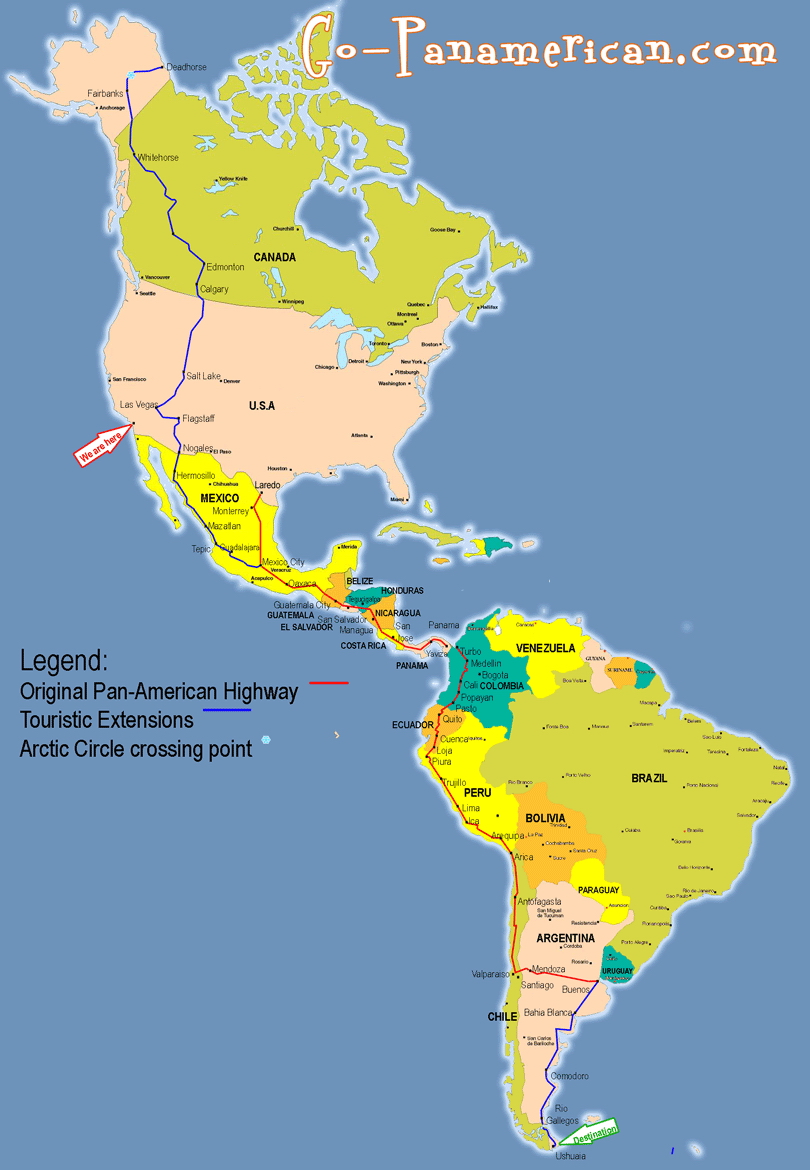
Levi jeans, in conjunction with the Discovery Channel, will follow the journey of 5 young U.S. Hispanics on their journey from Alaska to Argentina by way of the Pan-American Highway. The 10-week show will be broadcast in Spanish and is accompanied by a bilingual website. The three men and two women who were chosen to partake in this “trip of a lifetime” will have 10 stops along the way where they will work on projects related to music, style or design; all while wearing the latest from Levi’s Work Wear collection.
This TV series will represent Levi’s principal effort to-date at attracting the Hispanic market to the brand. If you read about Hispanic marketing here or elsewhere, you know that research has found the Hispanic segment to be generally young and a prominent user of social media. Levi’s is harnessing this vital piece of information by kick-starting their Levi’s-branded website with frequent updates from the 5 stars. These status updates can then be shared on other social media networks such as Twitter and Facebook to increase awareness and foster a base of followers for the show. This is all in conjunction with their “Go Forth” campaign, chosen specifically as the “pioneering” aspect was found to connect with the Hispanic market.
While the show will air in Spanish, Levi’s target market is the young bilingual Latino. This is one of the main reasons why the website following the show will be in both English and Spanish. Marketers have consistently found the task of successfully reaching this segment to be one of the most challenging and Levi’s hopes to have found an innovative way to reach out to them.
Levi Strauss & Co. is one of the United States’ great business pioneers, being founded in San Francisco, California in the 19th century. While the goal of the show is to target the Hispanic market, I feel that the general U.S. public can relate to the story. The United States was founded by explorers and pioneers willing to travel through uncharted land. This modern-day version, albeit with charted maps, illustrates a similar journey of new experiences and learning about one’s self.
I think it’s important that we, from time-to-time, go out and explore new frontiers and have new experiences…but if you can’t do that, at least you can zip up a new pair of Levi’s and follow these 5 Latinos on their personal journey through North and South America.
Levi jeans, in conjunction with the Discovery Channel, will follow the journey of 5 young U.S. Hispanics on their journey from Alaska to Argentina by way of the Pan-American Highway. The 10-week show will be broadcast in Spanish and is accompanied by a bilingual website. The three men and two women who were chosen to partake in this “trip of a lifetime” will have 10 stops along the way where they will work on projects related to music, style or design; all while wearing the latest from Levi’s Work Wear collection.
This TV series will represent Levi’s principal effort to-date at attracting the Hispanic market to the brand. If you read about Hispanic marketing here or elsewhere, you know that research has found the Hispanic segment to be generally young and a prominent user of social media. Levi’s is harnessing this vital piece of information by kick-starting their Levi’s-branded website with frequent updates from the 5 stars. These status updates can then be shared on other social media networks such as Twitter and Facebook to increase awareness and foster a base of followers for the show. This is all in conjunction with their “Go Forth” campaign, chosen specifically as the “pioneering” aspect was found to connect with the Hispanic market.
While the show will air in Spanish, Levi’s target market is the young bilingual Latino. This is one of the main reasons why the website following the show will be in both English and Spanish. Marketers have consistently found the task of successfully reaching this segment to be one of the most challenging and Levi’s hopes to have found an innovative way to reach out to them.
Levi Strauss & Co. is one of the United States’ great business pioneers, being founded in San Francisco, California in the 19th century. While the goal of the show is to target the Hispanic market, I feel that the general U.S. public can relate to the story. The United States was founded by explorers and pioneers willing to travel through uncharted land. This modern-day version, albeit with charted maps, illustrates a similar journey of new experiences and learning about one’s self.
I think it’s important that we, from time-to-time, go out and explore new frontiers and have new experiences…but if you can’t do that, at least you can zip up a new pair of Levi’s and follow these 5 Latinos on their personal journey through North and South America.
Thursday, July 1, 2010
Telecom Services Are Getting Hispanic Dollars - How Will Other Industries Fare?
This blog post was written by Paul Sangalang who is an intern at Conexión Marketing. He has received a B.A. in Business Administration from Washington State University in International Business and in December he will receive a second degree in the Spanish language.
In a 305-page report by Insight Research Corp. titled US Hispanic Use of Telecommunications Services 2010-2015, it concluded that Hispanic buyers will account for “17 percent of all residential telecom expenditures.” With the number of Hispanics in the US estimated to surpass 50 million, it’s apparent that this demographic will become a major target for marketers outside of only telecommunications services. Telecommunication companies, as well as other industries, have been aggressively marketing towards the Latino population for years, but the question is: when will all the other industries tap into this market segment?
It’s important to note that the Hispanic ethnicity is the youngest segment in the US, with the largest percentage of citizens under the age of 18. It was also found that Hispanic-Americans are very social online, which can be attributed to the youthfulness of the segment. If marketers play their cards right, they will be able to obtain long-term consumers and reap the financial benefits of lifetime customers.
According to early Census predictions, US Latinos will hold $1 trillion in buying power. It will be paramount for companies and industries, which haven’t already, to recognize the immense potential that the US Hispanic segment holds. It’s not too much of a stretch to presume that those companies who fail to recognize what the Hispanic market holds for their business will fall to the wayside, while those that do prosper.
It will be interesting to see how these companies market to the Hispanic segment and who will succeed in gaining the most market share. I’m sure that these industries are all thinking the same thing and will be working furiously to outmaneuver their rivals. So let the games begin…or better yet: ¡que comience el juego!
To view the article click here.
In a 305-page report by Insight Research Corp. titled US Hispanic Use of Telecommunications Services 2010-2015, it concluded that Hispanic buyers will account for “17 percent of all residential telecom expenditures.” With the number of Hispanics in the US estimated to surpass 50 million, it’s apparent that this demographic will become a major target for marketers outside of only telecommunications services. Telecommunication companies, as well as other industries, have been aggressively marketing towards the Latino population for years, but the question is: when will all the other industries tap into this market segment?
It’s important to note that the Hispanic ethnicity is the youngest segment in the US, with the largest percentage of citizens under the age of 18. It was also found that Hispanic-Americans are very social online, which can be attributed to the youthfulness of the segment. If marketers play their cards right, they will be able to obtain long-term consumers and reap the financial benefits of lifetime customers.
According to early Census predictions, US Latinos will hold $1 trillion in buying power. It will be paramount for companies and industries, which haven’t already, to recognize the immense potential that the US Hispanic segment holds. It’s not too much of a stretch to presume that those companies who fail to recognize what the Hispanic market holds for their business will fall to the wayside, while those that do prosper.
It will be interesting to see how these companies market to the Hispanic segment and who will succeed in gaining the most market share. I’m sure that these industries are all thinking the same thing and will be working furiously to outmaneuver their rivals. So let the games begin…or better yet: ¡que comience el juego!
To view the article click here.
Monday, March 8, 2010
Diversity Training for Communicators This Thursday!
Diversity: Accent accessible communications
March 11 Public Relations Society of America South Sound
• How many people did your most recent missive miss?
• Did your audience include people with visual or hearing impairments?
• Is it valuable to tweet in Spanish and other languages, or is it enough to translate your press releases?
Whether it’s a required part of your campaign or you simply want to reach more people, our team of experts will share tips at the March 11 South Sound Group on communicating with audiences you may be missing.
Kristina Walker of EnviroIssues will moderate a panel of experts:
- Kristine Edens, EnviroIssues
- Lauri Jordana, Conexión Marketing
- Kevin Nathan, Washington State Department of Services for the Blind
- Idalie Muñoz Muñoz, Muñoz Media
The South Sound Group meets at 8 a.m.—doors open early for networking—in the first floor board room at Metro Parks Tacoma headquarters, 4702 S. 19th St. Cost is $5 for PRSA members, $8 for nonmembers. Please sign in at the door. Refreshments are included, no reservations necessary.
Directions: From I-5 north or south, take SR-16 toward Gig Harbor. Take the 19th Street East exit toward Cheney Stadium, turn right on 19th, then right into the Metro Parks Tacoma parking lot. Note: please leave the customer-designated parking open for Metro Parks. If you require special accommodations for a disability, please contact Sheree Trefry at 253.305.1059 or shereet@tacomaparks.com at least 48 hours in advance of the meeting.
If you'd like more information about the benefits of PRSA membership and how to apply, please check out the website.
March 11 Public Relations Society of America South Sound
• How many people did your most recent missive miss?
• Did your audience include people with visual or hearing impairments?
• Is it valuable to tweet in Spanish and other languages, or is it enough to translate your press releases?
Whether it’s a required part of your campaign or you simply want to reach more people, our team of experts will share tips at the March 11 South Sound Group on communicating with audiences you may be missing.
Kristina Walker of EnviroIssues will moderate a panel of experts:
- Kristine Edens, EnviroIssues
- Lauri Jordana, Conexión Marketing
- Kevin Nathan, Washington State Department of Services for the Blind
- Idalie Muñoz Muñoz, Muñoz Media
The South Sound Group meets at 8 a.m.—doors open early for networking—in the first floor board room at Metro Parks Tacoma headquarters, 4702 S. 19th St. Cost is $5 for PRSA members, $8 for nonmembers. Please sign in at the door. Refreshments are included, no reservations necessary.
Directions: From I-5 north or south, take SR-16 toward Gig Harbor. Take the 19th Street East exit toward Cheney Stadium, turn right on 19th, then right into the Metro Parks Tacoma parking lot. Note: please leave the customer-designated parking open for Metro Parks. If you require special accommodations for a disability, please contact Sheree Trefry at 253.305.1059 or shereet@tacomaparks.com at least 48 hours in advance of the meeting.
If you'd like more information about the benefits of PRSA membership and how to apply, please check out the website.
Thursday, February 4, 2010
Rebranding Pepsi to Spanish Speakers
Have you heard about what Pepsi is doing in Argentina and Spain?
It's pretty amazing, really. BBDO, its agency, learned that Argentines tend to say "Pecsi" instead of "Pepsi." This is something universally known among Spanish speakers. But the agency was on to something when they leveraged this insight in its marketing to consumers in that country.
Pecsi was born. I even saw a rebranded Pecsi can, but I can't be sure they took it that far.
Now they've pulled a similar trick in Spain. But there, it's "Pesi." The ad is pretty hilarious, showing a famous soccer player pronouncing it the way ... well, the way they do. Pesi. Pecsi. It's just hard to get that second "p" in there for native Spanish speakers. I have friends from other countries who say one or other other--but I don't remember hearing "PePsi" from them, ever. Just like "picsa" (pizza).
So this is key for Pepsi: Learn how your customers are talking about you. Isn't that what social media is all about, when it comes to brands getting involved? This is the same thing, from my perspective. Pepsi shed its corporate image to talk to these consumers in their language. Brilliant, in my opinion.
My caveat here is that I don't believe this approach is something that can be taken on by brands ever category. For example, picture BMW and the version I always heard in Spain, "BMV." (I never understood that, by the way. If someone could please explain, I would very much appreciate it.) I think a premium brand would dilute its strength by succombing to the populace. Brands representing consumer packaged goods on the other hand are different in their natural positioning. They often work their way into serving as everyday nouns, despite trademarking and any other efforts those brands attempt.
But in this case, Pepsi is showing consumers that their way of interacting with the brand is important to the company.
My bet is that Pepsi, or "Pecsi," or "Pesi," has achieved a special appeal to these two national audiences in a way that really resonates.
Click here for the latest article in Ad Age on this topic and to see the spot Pepsi produced for its Spanish audience.
It's pretty amazing, really. BBDO, its agency, learned that Argentines tend to say "Pecsi" instead of "Pepsi." This is something universally known among Spanish speakers. But the agency was on to something when they leveraged this insight in its marketing to consumers in that country.
Pecsi was born. I even saw a rebranded Pecsi can, but I can't be sure they took it that far.
Now they've pulled a similar trick in Spain. But there, it's "Pesi." The ad is pretty hilarious, showing a famous soccer player pronouncing it the way ... well, the way they do. Pesi. Pecsi. It's just hard to get that second "p" in there for native Spanish speakers. I have friends from other countries who say one or other other--but I don't remember hearing "PePsi" from them, ever. Just like "picsa" (pizza).
So this is key for Pepsi: Learn how your customers are talking about you. Isn't that what social media is all about, when it comes to brands getting involved? This is the same thing, from my perspective. Pepsi shed its corporate image to talk to these consumers in their language. Brilliant, in my opinion.
My caveat here is that I don't believe this approach is something that can be taken on by brands ever category. For example, picture BMW and the version I always heard in Spain, "BMV." (I never understood that, by the way. If someone could please explain, I would very much appreciate it.) I think a premium brand would dilute its strength by succombing to the populace. Brands representing consumer packaged goods on the other hand are different in their natural positioning. They often work their way into serving as everyday nouns, despite trademarking and any other efforts those brands attempt.
But in this case, Pepsi is showing consumers that their way of interacting with the brand is important to the company.
My bet is that Pepsi, or "Pecsi," or "Pesi," has achieved a special appeal to these two national audiences in a way that really resonates.
Click here for the latest article in Ad Age on this topic and to see the spot Pepsi produced for its Spanish audience.
Monday, December 28, 2009
Cinco Años
Wow. I just looked at my calendar and guess what--It's been 5 years since I opened shop.
That's right: Five years ago I purchased my domain and applied for a business license and developed the Conexión Marketing brand and, little by little, I had a business. My early menu of services included marketing communications (collateral and merchandising), public relations and overarching strategies--services based on several in-house positions I'd held over the previous 16 years.
Friends, family and colleagues all asked, "Why are you doing Hispanic marketing in Seattle? Why not Yakima, or L.A.?" Seattle is my home, it's where I want to be--and though the Hispanic market was the fastest-growing cultural minority in our region, no Hispanic marketing firms called Seattle home.
My first clients were such a celebration, and they were such an important daily reminder of the talents and skills and experience that I offer in the area of Hispanic marketing.
Since those first clients, I've been on an amazing journey with this business. We began to partner with a handful of global agencies (and their national accounts) and are still happily helping many of them with Hispanic efforts today. We've even worked with a few local ad agencies on work within Washington State and the Pacific Northwest.
We've worked in advertising as well, with one caveat to our clients: They must be able to provide a positive customer experience for the Latino consumer before advertising commences. We believe in "marketing inside out," meaning, make sure you can truly service this segment before you target it with advertising.
We then made the big move to our downtown office at Third & Union, an important move for so many reasons. Most importantly, we're accessible to many of our clients while enjoying the hustle and bustle of downtown Seattle. (Feel free to schedule a visit!)
But helping local companies understand their need to reach this fast-growing segment in the right way continued to be a barrier, so we produced our own research. Hispanic Consumers in the Puget Sound Region was a first-of-its-kind study that helped local companies visualize the important of the local Latino community. It included much more than demographics; it included primary data on such topics as media consumption, language preference, top-of-mind brands in several categories, and more. This study is still available as a free download at our website. (Note that while most of the information is likely still very pertinent nearly three years later, our local media environment has seen many changes since we published the study.)
This study was an important benchmark for Conexión Marketing and the industry; it put the local Latino community on the map in the minds of marketers doing business in our region.
Since then, we've conducted much more research, mostly through partnerships with local research firms. Learning about Seattle-area Latinos is so essential in order to effectively understand their needs. Ours is truly a different market--unlike any of your "typical" Hispanic markets, and even wildly different from that of Eastern Washington markets.
We branched out with the verticals we've served over the past five years, helping companies in a variety of industries--banking, communications (telecom, broadband, cable), healthcare, insurance, civic efforts, media, retail, and consumer packaged goods.
Another way that our firm has branched out has been to incorporate social media into plans when it makes sense. We've done this for several clients now, and while it's difficult to measure ROI on social media, we have seen that it really does nurture a sense of "community" and that consumers enjoy being able to interact with brands. And we're certain that Latinos here are embracing social media because we see them regularly posting on several sites--including at least two local social media sites developed specifically for Latinos!
So while some companies may be holding back on their marketing budgets until the recession's in the rear-view mirror, other companies are stepping up with effective strategy and messaging and becoming #1 in their category locally, even nationally. That's the power of the fastest-growing cultural segment, nationally and locally.
What will 2010 hold? Hopefully, more of the same! Especially since we're expecting this coming year's Census figures to blow away U.S. marketers. Those of you already on board with Hispanic marketing, kudos! You're getting in while competition's light and media is affordable--so your brand is benefitting in a cost-effective way. Who knows what will happen after Census data is released?
I love my business, and I work with so many wonderful and talented people--our clients, our vendors and partners. A big GRACIAS to our many loyal clients, several whom we've served 4+ years!
And here's to a 2010 full of joy and prosperity for us all.
That's right: Five years ago I purchased my domain and applied for a business license and developed the Conexión Marketing brand and, little by little, I had a business. My early menu of services included marketing communications (collateral and merchandising), public relations and overarching strategies--services based on several in-house positions I'd held over the previous 16 years.
Friends, family and colleagues all asked, "Why are you doing Hispanic marketing in Seattle? Why not Yakima, or L.A.?" Seattle is my home, it's where I want to be--and though the Hispanic market was the fastest-growing cultural minority in our region, no Hispanic marketing firms called Seattle home.
My first clients were such a celebration, and they were such an important daily reminder of the talents and skills and experience that I offer in the area of Hispanic marketing.
Since those first clients, I've been on an amazing journey with this business. We began to partner with a handful of global agencies (and their national accounts) and are still happily helping many of them with Hispanic efforts today. We've even worked with a few local ad agencies on work within Washington State and the Pacific Northwest.
We've worked in advertising as well, with one caveat to our clients: They must be able to provide a positive customer experience for the Latino consumer before advertising commences. We believe in "marketing inside out," meaning, make sure you can truly service this segment before you target it with advertising.
We then made the big move to our downtown office at Third & Union, an important move for so many reasons. Most importantly, we're accessible to many of our clients while enjoying the hustle and bustle of downtown Seattle. (Feel free to schedule a visit!)
But helping local companies understand their need to reach this fast-growing segment in the right way continued to be a barrier, so we produced our own research. Hispanic Consumers in the Puget Sound Region was a first-of-its-kind study that helped local companies visualize the important of the local Latino community. It included much more than demographics; it included primary data on such topics as media consumption, language preference, top-of-mind brands in several categories, and more. This study is still available as a free download at our website. (Note that while most of the information is likely still very pertinent nearly three years later, our local media environment has seen many changes since we published the study.)
This study was an important benchmark for Conexión Marketing and the industry; it put the local Latino community on the map in the minds of marketers doing business in our region.
Since then, we've conducted much more research, mostly through partnerships with local research firms. Learning about Seattle-area Latinos is so essential in order to effectively understand their needs. Ours is truly a different market--unlike any of your "typical" Hispanic markets, and even wildly different from that of Eastern Washington markets.
We branched out with the verticals we've served over the past five years, helping companies in a variety of industries--banking, communications (telecom, broadband, cable), healthcare, insurance, civic efforts, media, retail, and consumer packaged goods.
Another way that our firm has branched out has been to incorporate social media into plans when it makes sense. We've done this for several clients now, and while it's difficult to measure ROI on social media, we have seen that it really does nurture a sense of "community" and that consumers enjoy being able to interact with brands. And we're certain that Latinos here are embracing social media because we see them regularly posting on several sites--including at least two local social media sites developed specifically for Latinos!
So while some companies may be holding back on their marketing budgets until the recession's in the rear-view mirror, other companies are stepping up with effective strategy and messaging and becoming #1 in their category locally, even nationally. That's the power of the fastest-growing cultural segment, nationally and locally.
What will 2010 hold? Hopefully, more of the same! Especially since we're expecting this coming year's Census figures to blow away U.S. marketers. Those of you already on board with Hispanic marketing, kudos! You're getting in while competition's light and media is affordable--so your brand is benefitting in a cost-effective way. Who knows what will happen after Census data is released?
I love my business, and I work with so many wonderful and talented people--our clients, our vendors and partners. A big GRACIAS to our many loyal clients, several whom we've served 4+ years!
And here's to a 2010 full of joy and prosperity for us all.
Friday, December 4, 2009
Reaching Unbanked Latinos
In celebration of Plaza Bank President & CEO Carlos Guangorena's birthday today, I'd like to write a little about banking and Latinos. In general, immigrants to the U.S. are much less likely to be banked than American-born. In addition, certain minorities are especially unlikely to have a relationship with a banking institition.
The problem with not having that banking relationship is that then it's difficult to establish credit. And we know that, without credit, many things--like home ownership--are simply unattainable. Now sometimes we hear that employers even check credit reports of their candidates to ensure that they're "responsible." Well, not having any credit at all doesn't make a person "irresponsible," it just means they're living outside the societal norm in the United States. And if they come from a place where banks closed and they lost all their savings, you can understand their hesitation. But now, you see, they have limited opportunities.
According to a first-ever federal survey on the topic, minority groups showed to be much less likely than the overall population to have standard banking relationships. In fact, an article in yesterday's L.A. Times reports on the survey: "Nearly 22% of black households were unbanked, as well as 19.3% of Latino households and 15.6% of Native American households. Just 3.5% of Asians and 3.3% of whites did not use banking services." That's an astounding gap.
Excerpt from the article:
"Many Latinos are most comfortable operating in cash," said James Gutierrez,
chief executive of Progreso Financiero in Mountain View, Calif., which focuses
on giving small, short-term loans to Latinos. Instead of having a paycheck put
on hold for several days at a bank, many turn to expensive payday loans for
immediate liquidity. "There's a lot of distrust of banks," Gutierrez said. "But
even though it's convenient for them to operate outside the financial
mainstream, they can't build a credit history, get a small-business loan, build
wealth. You need to give people a staircase upwards."
Here in the Puget Sound region, Plaza Bank was formed, about four years ago, on this very principle. The founders and directors wanted to create an institution that would be accessible, and since many of them were Latino, they created the Pacific Northwest's first Latino bank--with bilingual/bicultural staff, services and materials. They of course welcome everyone to bank there, with business lending and administrative office is right here in downtown Seattle, and a gorgeous retail branch at the Kent Station Shopping Center in Kent. The Bank has been offering not only your typical bank products for consumers and businesses, but also opportunities for financial literacy. This is what sets Plaza Bank apart from the bigger banks. It's a community bank that is truly reaching out.
For the same reason, the organization Bank On Seattle was created a couple of years back. The mission of Bank on Seattle was to make banking accessible to the unbanked--and keep this population from losing all its money through payday loan services. They formed a cooperative of many credit unions and banks, including Plaza Bank. If anyone can provide information describing the organization's current efforts or achievements, that would be great to learn.
As a side note, in our own survey of Puget Sound Latinos two years ago, we learned that 56% of local Latinos are banked (meaning they have a savings account, checking account or both), which makes the Seattle area market very different from the national average.
Sources: Hispanic Consumers in the Puget Sound Region study available FREE at www.conexion-marketing.com; http://www.linkedin.com/redirect?url=http%3A%2F%2Fwww%2Eeveryoneiswelcome%2Eorg%2F&urlhash=JqF9 ; http://www.linkedin.com/redirect?url=http%3A%2F%2Fwww%2Elatimes%2Ecom%2Fbusiness%2Fla-fi-fdic-unbanked3-2009dec03%2C0%2C487549%2Estory&urlhash=Al9R
Friday, November 13, 2009
Latino Media in the Seattle Area
This just in - a study of Seattle-area Latino adults and their Spanish-language media consumption by Portland's Rojo Research illustrated a clear preference for Univision.
In fact, Univision earned 67% market share, followed by KDDS 99.3 FM – La Gran D which saw 42.7%. Note that I'm not sure whether they were measuring actual consumption of the local Univisión affiliate (over-the-air) or the national network channel.
The study involved traditional media (versus online). In May, Rojo Research interviewed 485 Latino households in King, Pierce, Snohomish, Skagit, Thurston, Kitsap, and Island counties for a 58-question, 22 minute study. More than 33,200 households were contacted; 55% of participants preferred to respond in Spanish.
The Top 10 Seattle Latino Media Ranking according to this 2009 Rojo Research study:
This is it, folks - if your company or organization wants to benefit from the patronage of our Hispanic population, please consider getting involved in Hispanic marketing now while rates are at an all-time low and your message will shine bright! Once the 2010 Census data is out, Hispanic media rates and availability will change forever. Make sure your brand is the one Latinos are thinking of, starting NOW.
Imagine: Your brand can be the category leader for the largest minority and the fastest-growing population here and nationally.
And, of course, we can help. Call me at 206-621-2185 and let's talk!
In fact, Univision earned 67% market share, followed by KDDS 99.3 FM – La Gran D which saw 42.7%. Note that I'm not sure whether they were measuring actual consumption of the local Univisión affiliate (over-the-air) or the national network channel.
The study involved traditional media (versus online). In May, Rojo Research interviewed 485 Latino households in King, Pierce, Snohomish, Skagit, Thurston, Kitsap, and Island counties for a 58-question, 22 minute study. More than 33,200 households were contacted; 55% of participants preferred to respond in Spanish.
The Top 10 Seattle Latino Media Ranking according to this 2009 Rojo Research study:
- Univision
- KDDS 99.3 FM - La Gran D
- Telemundo
- Spanish-Language Outdoor Advertising
- TV Azteca
- KKMO 13360 AM - El Rey
- KTBK 1210 AM - Ke Buena
- Sea Latino Newspaper (now defunct)
- El Mundo Newspaper
- La Raza del Noroeste Newspaper
This is it, folks - if your company or organization wants to benefit from the patronage of our Hispanic population, please consider getting involved in Hispanic marketing now while rates are at an all-time low and your message will shine bright! Once the 2010 Census data is out, Hispanic media rates and availability will change forever. Make sure your brand is the one Latinos are thinking of, starting NOW.
Imagine: Your brand can be the category leader for the largest minority and the fastest-growing population here and nationally.
And, of course, we can help. Call me at 206-621-2185 and let's talk!
Tuesday, October 27, 2009
La Raza: Pastor alemán, por ejemplo
I just read the latest post from Deb Arnold on the importance of knowing your audience. The moral of her story is to ask yourself: Who do you think you're talking to?
So many businesses forget this really important step of identifying your audience prior to crafting communications to that audience. It can be disastrous, even in a low-key, skill-building, team-building situation like the one Deb describes.
But imagine if you're brand is making its first impression!
Take a read! And think: What dog breeds do you know in a second language?
So many businesses forget this really important step of identifying your audience prior to crafting communications to that audience. It can be disastrous, even in a low-key, skill-building, team-building situation like the one Deb describes.
But imagine if you're brand is making its first impression!
Take a read! And think: What dog breeds do you know in a second language?
Monday, October 26, 2009
Do Hispanics rate products higher because they're Hispanic?
This is a question that multicultural researchers deal with in our work: Are our research participants responding frankly, or are they being polite? Because based on their culture, they may just be responding in a way they think is "appropriate."
Hispanics in particular tend to not want to show disrespect to authority (which can include the focus group moderator). This means that, when you are seeking true reactions to your marketing communications, your product, your new policy--you might have to take this cultural nuance into account in your summary.
Something I do when I'm moderating Hispanic groups that has been very helpful in encouraging their truthful opinions is that I use humor and humility at the outset, before we even get started. I also make it abundantly clear that I am in no way attached to the product or communications we're discussing. This seems to break the ice in a way that encourages more honest responses throughout the session.
This topic was brought to mind thanks to this month's newsletter from Quirk's Marketing Research Review. I've pasted in the piece below, for your consideration:
A trend has emerged in multicultural research showing that Hispanics rate certain products higher than non-Hispanics simply because they are Hispanic. The phenomenon is known as cultural lift, and it can be taken into account to improve the accuracy of results when conducting preference testing.
According to Savitz Research Companies, Dallas, Hispanics gave 5.9 percent higher average ratings than non-Hispanics in the U.S. on a zero-to-100-point scale, even though high product ratings often didn't translate to a rise in sales and usage. It has been thought that cultural influences may make Hispanics more reluctant to provide negative or impolite feedback.
When evaluating soft drinks, for example, Hispanics rated Pepsi 80.8, while non-Hispanics rated it 74.8, making it appear that Hispanics like Pepsi more and would be a better target. Ratings for 7-Up were essentially the same, at 73 for Hispanics and 73.7 for non-Hispanics. When asked to rate Fanta, a drink which Hispanics are known to prefer, Hispanics gave a rating of 80, compared to a 57.6 rating by non-Hispanics. After the 5.9-point adjustment of the Hispanic ratings to remove the cultural bias, Hispanics and the general population actually feel about the same about Pepsi, non-Hispanics prefer 7-Up and Hispanics still definitely like Fanta more than non-Hispanics.
What do you think? What have your experiences been, and how have you handled differences in communication? Please feel free to share here.
Friday, October 9, 2009
Latino Market Numbers Amaze
So the problem with an event-filled month like Hispanic Heritage Month is that I get behind in posts and .. filing. I'm working on both now.
Speaking of this month of events, did you know that an estimated 90,000 Latinos turned out for our area's biggest event of the year: Fiestas Patrias at the Puyallup Fair. That's double the Latino attendance last year. It just keeps growing. A reflection of the growing overall Hispanic presence here in the Puget Sound region.
Last week I attended a great workshop hosted by the City of Federal Way. And this is my opportunity to say "Bravo" to Federal Way, because this City has its own Hispanic Liaison--Teniel Sabin--who is a very approachable young lady who is helping Federal Way officials effectively reach out to its Latino residents and make services and opportunities known. Very cool!
Anyway, this workshop was entitled, "Business Development in the Hispanic Market." I expected a lot of companies to show up, looking for ways to better link to Latinos locally. There were some, yes, but there were also a fair number of Hispanics--established business owners, aspiring entrepreneurs, others in transition. That surprised me, but I thought that was cool that they were showing up for a government workshop, which by the way, was partially presented bilingually.
Before the presentation attendees were encouraged to check out several displays of some of the services available, including those of Washington CASH and others.
Idalie Muñoz was the speaker. She worked for the U.S. Census in a past life--so she loves numbers. Idalie covered a lot of data, most of which I was very familiar with but will repeat here nonetheless for those of you just tuning in:
Between 1990-2008, the Hispanic segment saw a great advantage nationally as well.
National numbers from the U.S. Census show unbelievable Hispanic buying power growth:
1990 - $12 billion
2000 - $450 billion
2008 - $951 billion
>>and forecast for 2013? $1.4 TRILLION.
What are some of the factors in this growth? It's the fastest-growing segment, there's a higher level of education attained now versus in the past, this segment boast a larger young population entering the job market, and a fast-growing number of Hispanic-owned businesses were cited by Idalie.
In addition to U.S. Census numbers, she also referenced The Multicultural Economy 2008, from the Selig Center for Economic Growth, University of Georgia. It's an amazing reference for anyone interested in an in-depth look at some more current numbers.
Speaking of this month of events, did you know that an estimated 90,000 Latinos turned out for our area's biggest event of the year: Fiestas Patrias at the Puyallup Fair. That's double the Latino attendance last year. It just keeps growing. A reflection of the growing overall Hispanic presence here in the Puget Sound region.
Last week I attended a great workshop hosted by the City of Federal Way. And this is my opportunity to say "Bravo" to Federal Way, because this City has its own Hispanic Liaison--Teniel Sabin--who is a very approachable young lady who is helping Federal Way officials effectively reach out to its Latino residents and make services and opportunities known. Very cool!
Anyway, this workshop was entitled, "Business Development in the Hispanic Market." I expected a lot of companies to show up, looking for ways to better link to Latinos locally. There were some, yes, but there were also a fair number of Hispanics--established business owners, aspiring entrepreneurs, others in transition. That surprised me, but I thought that was cool that they were showing up for a government workshop, which by the way, was partially presented bilingually.
Before the presentation attendees were encouraged to check out several displays of some of the services available, including those of Washington CASH and others.
Idalie Muñoz was the speaker. She worked for the U.S. Census in a past life--so she loves numbers. Idalie covered a lot of data, most of which I was very familiar with but will repeat here nonetheless for those of you just tuning in:
- There are about 46 million Latinos in the U.S. That's about 15% of our total population. In fact, in the entire world, the only country with more Hispanics is Mexico.
- Washington is one of 16 states that has at least a half-million Hispanic residents.
- Washington is one of 20 states wherein Hispanics are the largest minority.
Between 1990-2008, the Hispanic segment saw a great advantage nationally as well.
- Hispanics: 348.9%
- Non-Hispanics: 140.75%
- Hispanics: 554.3%
- Non-Hispanics 211.1%
National numbers from the U.S. Census show unbelievable Hispanic buying power growth:
1990 - $12 billion
2000 - $450 billion
2008 - $951 billion
>>and forecast for 2013? $1.4 TRILLION.
What are some of the factors in this growth? It's the fastest-growing segment, there's a higher level of education attained now versus in the past, this segment boast a larger young population entering the job market, and a fast-growing number of Hispanic-owned businesses were cited by Idalie.
In addition to U.S. Census numbers, she also referenced The Multicultural Economy 2008, from the Selig Center for Economic Growth, University of Georgia. It's an amazing reference for anyone interested in an in-depth look at some more current numbers.
Tuesday, September 22, 2009
Culture Shock: TIME
Punctuality can mean different things to different people, even in our own country. Heck, even within our own families. So imagine the culture shock of being an uber-punctual person and entering the traditionally slower clock of Latin culture! Or imagine the opportunities lost in the reverse situation.
In a class I took last quarter on negotiations, we role played in every class. The last one we had to do was an intercultural negotation between U.S. businesspeople and those from a make-believe country called Amazonia. I was on the U.S. side, and when we sat down to get started, we waited. And we waited. I thought, "Wow, our classmates sure don't care about this negotiation!" "They sure aren't respecting our time," our teammates said. And it got worse from there.
Well, what we didn't know upfront about this particular negotiation is that they were coached to, among other things, 1) not obey the clock, 2) not negotiate with women, and 3) talk about families, cars--anything but the business at hand. So you can imagine how this negotiation process went! Pretty quickly I saw what was happening--and applauded the Amazonia team's fabulous acting. But many U.S. teams never quite figured it out.
Last weekend I went to a quinceañera, celebrating the 15th birthday of the daughter of a friend of mine, from Mexico. It was to start at 5, so I arrived at 5:15. The next guest arrived around 6. Most were there by 7, but they continued to trickle in. That's the way it is.
But it's not that way in every situation and for every Latino.
I read an article in last Sunday's Seattle Times. "Mexicans know when they should be punctual and which things start punctually," for me was a helpful quote from the article. This one's worth a read.
In a class I took last quarter on negotiations, we role played in every class. The last one we had to do was an intercultural negotation between U.S. businesspeople and those from a make-believe country called Amazonia. I was on the U.S. side, and when we sat down to get started, we waited. And we waited. I thought, "Wow, our classmates sure don't care about this negotiation!" "They sure aren't respecting our time," our teammates said. And it got worse from there.
Well, what we didn't know upfront about this particular negotiation is that they were coached to, among other things, 1) not obey the clock, 2) not negotiate with women, and 3) talk about families, cars--anything but the business at hand. So you can imagine how this negotiation process went! Pretty quickly I saw what was happening--and applauded the Amazonia team's fabulous acting. But many U.S. teams never quite figured it out.
Last weekend I went to a quinceañera, celebrating the 15th birthday of the daughter of a friend of mine, from Mexico. It was to start at 5, so I arrived at 5:15. The next guest arrived around 6. Most were there by 7, but they continued to trickle in. That's the way it is.
But it's not that way in every situation and for every Latino.
I read an article in last Sunday's Seattle Times. "Mexicans know when they should be punctual and which things start punctually," for me was a helpful quote from the article. This one's worth a read.
Tuesday, August 25, 2009
Global and Regional Marketing
Global companies have the extra responsibility of appealing to consumers in various regions and countries, which may require research, localization, and other tactics to pull it off effectively.
Are there particular colors we shouldn't be using in an ad that will appear in China? What about the handshake--what might that signify in the Middle East? It seems there's no such thing as too many questions.
We need to be very aware of the cultural cues and norms of the area we're targeting. You may even require a partner that has this experience and can guide you to successful marketing strategies in your targeted regions.
Of course, all companies are trying to cinch their belts, especially right now. What that means is that they are likely to create one global campaign. This campaign is then simply tweaked to create independent market versions that are culturally and linguistically appropriate--but that rely on the overarching branding and tone. They may substitute imagery, colors, and other graphic elements.
But every effort in this regard is not graceful. Not even those of premier global brands--companies that should know better and have the resources to do the job right.
Check out this Microsoft example and tell me what you think. Better yet, how does it make you feel?
Are there particular colors we shouldn't be using in an ad that will appear in China? What about the handshake--what might that signify in the Middle East? It seems there's no such thing as too many questions.
We need to be very aware of the cultural cues and norms of the area we're targeting. You may even require a partner that has this experience and can guide you to successful marketing strategies in your targeted regions.
Of course, all companies are trying to cinch their belts, especially right now. What that means is that they are likely to create one global campaign. This campaign is then simply tweaked to create independent market versions that are culturally and linguistically appropriate--but that rely on the overarching branding and tone. They may substitute imagery, colors, and other graphic elements.
But every effort in this regard is not graceful. Not even those of premier global brands--companies that should know better and have the resources to do the job right.
Check out this Microsoft example and tell me what you think. Better yet, how does it make you feel?
Monday, August 24, 2009
Great Party Trick
Each year, the U.S. Census celebrates Hispanic Heritage Month by pulling together some great trivia on our dynamic Hispanic population in the US of A.
This is an amazing compilation of facts--some even a surprise to Hispanic marketers!
Among my favorites:
This is an amazing compilation of facts--some even a surprise to Hispanic marketers!
Among my favorites:
- The U.S. has the second-largest Hispanic population in the world, second only to Mexico.
- By 2050, Hispanics will constitute 30% of the nation's population.
There are 48 U.S. counties that are majority-Hispanic. - We have 1.6 million Hispanic-owned businesses.
Thursday, August 20, 2009
Opportunity during the recession
This is a post written by Intern Tim Hemphill, who is majoring in economics and Spanish at the UW with just one quarter left to go.
According to Tamara Barber in her July 20th article published by Forrester Research, Inc., “Hispanic Consumers Offer Opportunities in a Recession,” now is not the time for companies to cut or discontinue funding for marketing targeted to the Hispanic community.
One of the more interesting points supporting this conclusion found that Hispanics are more loyal to brand names than non-Hispanics, although the number is declining in recent years, perhaps due to a younger-skewing demographic.
Also, Hispanics are less annoyed with advertisements and more dependent on them for making purchases, something that once again has declined since last year.
All of this suggests that further cuts in marketing to the Hispanic community could lead to an unfavorable trend for companies that previously had success reaching this segment of the population.
Note that this segment comprises almost 10% of the spending power in the U.S. The Hispanic population is large enough and important enough to make them a priority in marketing strategy, and without prompt changes, companies could lose opportunities in the long run despite their efforts to save money now.
For a subscription to Forrester see its website.
According to Tamara Barber in her July 20th article published by Forrester Research, Inc., “Hispanic Consumers Offer Opportunities in a Recession,” now is not the time for companies to cut or discontinue funding for marketing targeted to the Hispanic community.
One of the more interesting points supporting this conclusion found that Hispanics are more loyal to brand names than non-Hispanics, although the number is declining in recent years, perhaps due to a younger-skewing demographic.
Also, Hispanics are less annoyed with advertisements and more dependent on them for making purchases, something that once again has declined since last year.
All of this suggests that further cuts in marketing to the Hispanic community could lead to an unfavorable trend for companies that previously had success reaching this segment of the population.
Note that this segment comprises almost 10% of the spending power in the U.S. The Hispanic population is large enough and important enough to make them a priority in marketing strategy, and without prompt changes, companies could lose opportunities in the long run despite their efforts to save money now.
For a subscription to Forrester see its website.
Tuesday, August 18, 2009
Language as a variable in Hispanic marketing
The Spanish language is one way that marketers can differentiate their Hispanic marketing from that targeted to the general market. Sometimes it's the only way, but I think that's a miss.
In any case the language piece of Hispanic marketing has a lot of folks puzzled. I just read an Ad Age post that really sums it all up. Call it Language for Marketing to Hispanics 101. It's actually entitled E for Español and it's an excerpt from Hispanic agency Dieste's online Diestepedia.
Take a read and let me know your thoughts!
In any case the language piece of Hispanic marketing has a lot of folks puzzled. I just read an Ad Age post that really sums it all up. Call it Language for Marketing to Hispanics 101. It's actually entitled E for Español and it's an excerpt from Hispanic agency Dieste's online Diestepedia.
Take a read and let me know your thoughts!
Wednesday, July 29, 2009
Rethinking Hispanic Advertising
Hola - it's 102° in Seattle today. Why am I sharing this? Because no one can believe it. This is an all-time high temp in the history of my city. And I have no A/C in the office or at home. Pobrecita.
There's a fun TV spot I'd like to share with you. I'm sharing it because frankly it's a great ad. It happens to be an award-winning Hispanic ad from Latinworks--but you'll notice that there's not a lot of Spanish language in it.
This may surprise some of you who might think that advertising that reaches Latinos has to have certain stereotypical elements in it, or even language. And note that just because it's a "Hispanic ad" doesn't mean us gringos can't enjoy it.
It's about reaching the demographic, and it can be done any number of ways. But simply translating your general market ad is probably not be one of them.
Take a look...feel free to share your thoughts.
There's a fun TV spot I'd like to share with you. I'm sharing it because frankly it's a great ad. It happens to be an award-winning Hispanic ad from Latinworks--but you'll notice that there's not a lot of Spanish language in it.
This may surprise some of you who might think that advertising that reaches Latinos has to have certain stereotypical elements in it, or even language. And note that just because it's a "Hispanic ad" doesn't mean us gringos can't enjoy it.
It's about reaching the demographic, and it can be done any number of ways. But simply translating your general market ad is probably not be one of them.
Take a look...feel free to share your thoughts.
Subscribe to:
Posts (Atom)